Jerry Maguire Lessons

I’ve always had a thing for movie quotes, tending to spout off a line from a movie- often at odd times when I should instead say something human. I’ve talked before about how I won Scott over on our second date with a line from ‘Dumb and Dumber’. (Clearly he had high standards.)

But lately I’ve been thinking about the movie Jerry Maguire. It came out in late 1996, my freshman year in college, so perhaps I was in prime position to absorb all of the lessons in that precariously impressional phase in life. There’s a scene in the beginning where sports agent Jerry Maguire has a revelation. He’s inspired to take the superficial, money-driven industry of sports representation into something more heartfelt and meaningful. On a whim, he writes it all down and rushes in the middle of the night to the copy place. As the copy worker hands him back his ‘mission statement’ he says, “That’s how you become great, man. Hang your {guts} out there.” (Those that have seen the movie know it’s a bit more male anatomical-themed than guts.)

Every time I take a risk, sign up for something scary, or take a leap that stretches beyond the safety of my wheelhouse, I think of this line. (Although in the movie, the line is a bit of an ironic harbinger of the industry’s future negative response to Jerry’s vision.)

This year of research has included it’s fair share of anxiety, fear, anticipation, and prayer- especially in regards to my next step. In fact, deciding to take a year off to learn was in no way a result of not liking my job. Quite the opposite- I wanted to be sharper at my job. And part of me knew that the restlessness I’ve felt the last few years in education might need to be appeased. I might need to hang my guts out there.

A few months ago, out of fear for not having a clear hunch of what to do next year (do I return to the classroom or find a way to keep advocating for education reform?), I wrote down a dream job description. I included things I had been helping with and different mental health committees I was involved with throughout the county. I thought about what I’d love to do to help those kids from hard places who consistently fall through the cracks. I hoped for a way to support our exhausted teachers, administrators and social workers.

A few days ago, the stars somehow aligned, or perhaps leadership gave in to my broken record appeals of ‘saving the children’, and I accepted a new position. I will be serving as a “Student Advocate” next year; emphasizing trauma-informed practices, community connections, and collaboration with ALL stakeholders in a child’s life.

I’m incredibly ecstatic and simultaneously terrified. On one hand, I get to continue the trauma advocacy work that has fueled my ambitions the last few years. On the other hand, we are trying something new, and change is hard! Will I be perfect at it every day? Not a chance. But I hope to go in with an open mind and open heart to the possibility of changing the script for how we support students in our school system.

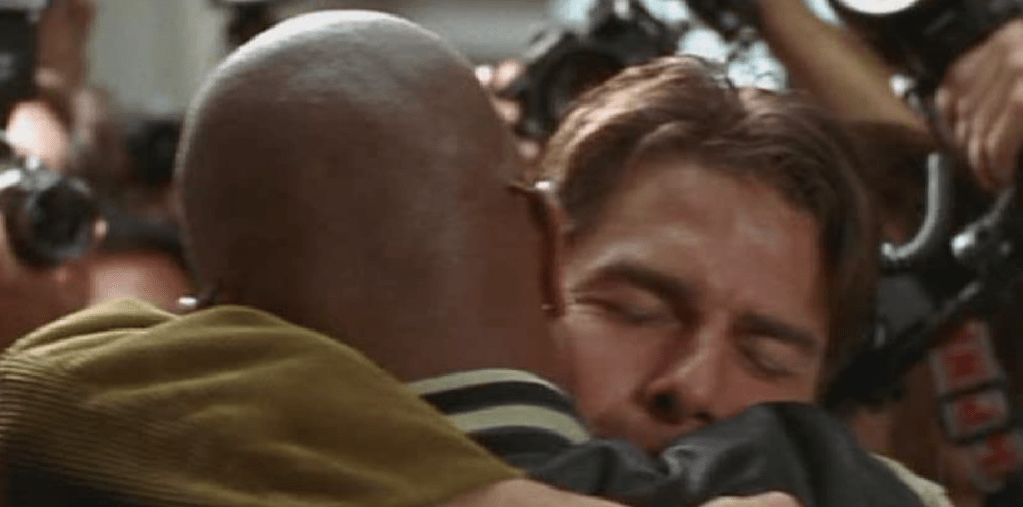
And I’m reminded of a scene at the end of Jerry Maguire as well. Football player client Cuba Gooding Jr. has a good game moment, and the first person he looks for is his agent, Jerry Maguire. Not because of the amount he’s paid him, or all the deals he’s gotten him, but solely because of the relationship of loyal support he has built- coming full circle to the intended purpose of Jerry’s mission statement in the beginning. These are the types of relationships we need to cultivate- not only in schools but as humans together. Seeing each other, supporting and being there for each other.
I talk to so many people that are hoping, dreaming of trying something. Maybe it’s time.
Be great; hang your b-, I mean, guts out there.

** Peaceful Neighbor by Michael G Long was not your average Mister Rogers biography. It highlighted his quiet way of protesting the things he believed in for our society…especially when they involved children. A good read for anyone standing on the precipice of the revolution- those hanging their guts out there!

Click book cover for Amazon link

The Troll Hand

It was my senior year of undergrad at the University of Minnesota. My roommate Carrie and I walked to class; we were living off campus then, so we always parked in Dinkytown for free and walked into campus for our elementary education classes.

We hurried quickly, running late as always, jumping over piles of late-fall leaves and discarded Minneapolis litter. Yet when we spotted it, we both stopped mid-hurry. On the sidewalk lay the small hand of a creature- grotesquely severed mid-wrist. It appeared to have the skin of a tiny human hand, with a sleeve of dark fur beginning at the base.

Knowing we were growing later by the second, we walked on, but excitedly discussed the bizzarity as we hypothesized the hand’s origin. And even though we teetered on the precipice of full time adulting, we giggled through the lecture that afternoon- obsessed with the sighting of the “the troll hand”.

After being released from class, Carrie and I hustled back the way we came on University Avenue. Shocked to find it still there, we did what any budding elementary educators would do and scooped it up using a discarded Dairy Queen cup. To the disgust of our third roommate Christine, we carried it inside the apartment back home trying to decide what creature it detached from and slightly convinced we may have intercepted some sort of government secret.

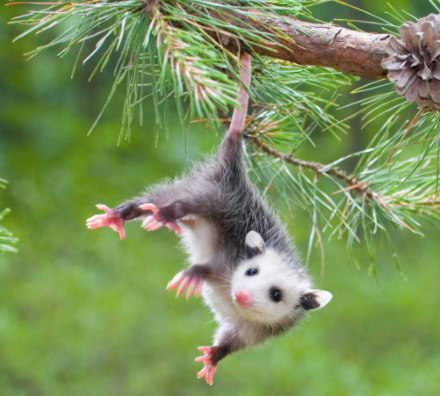
Wrapping it carefully in a bag and storing it in the freezer (which Christine really loved) we went to the computer. It was the early days of the ‘interwebs’ so we grabbed a cup of coffee and waited for AOL dial up to load. After a bit of searching, we finally settled that it must have come from an opossum; which according to ‘Ask Jeeves’ and Yahoo said often bore a hairy resemblance to a human hand, perhaps the lone survivor of a predatory animal’s attack.

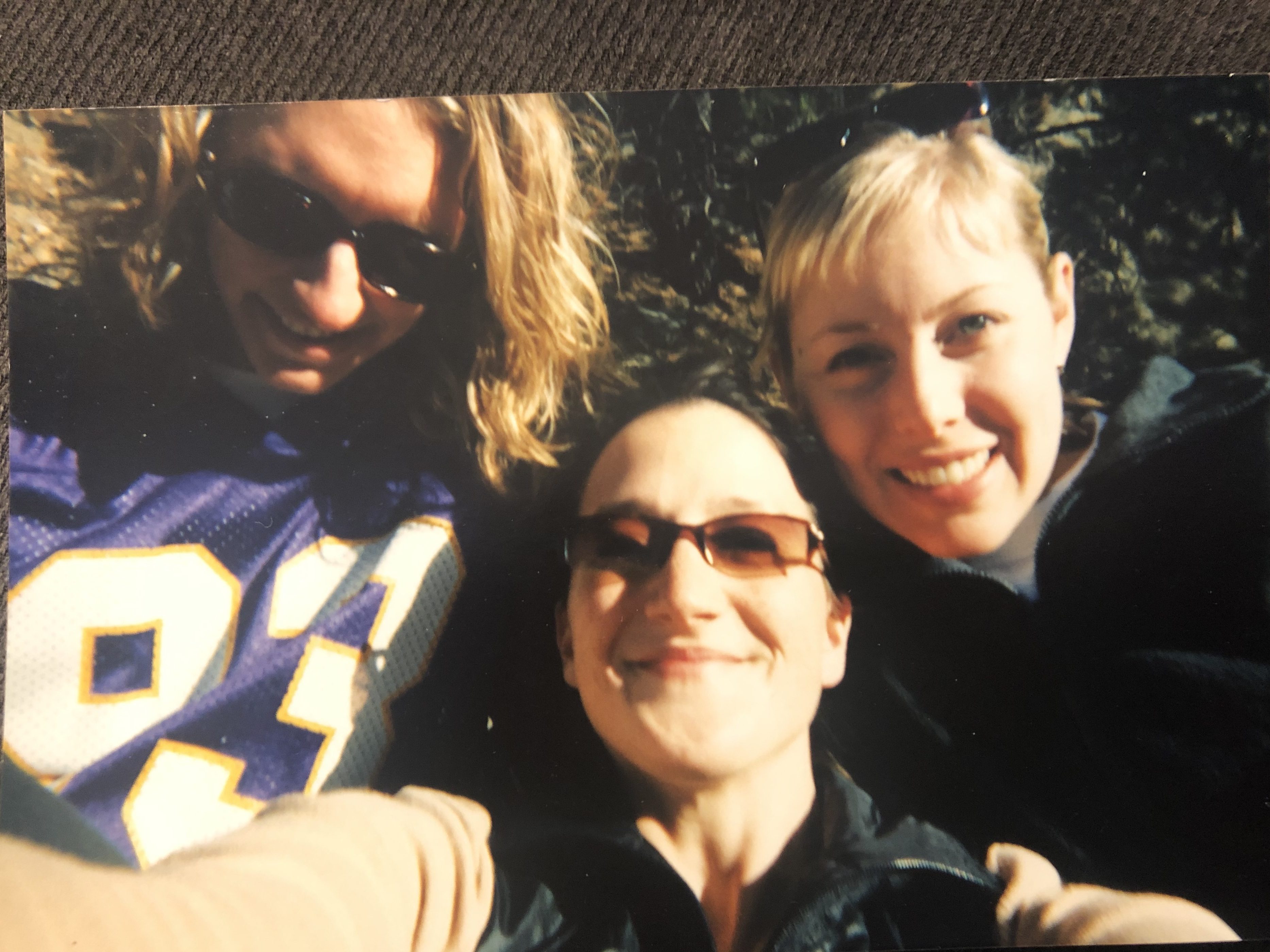
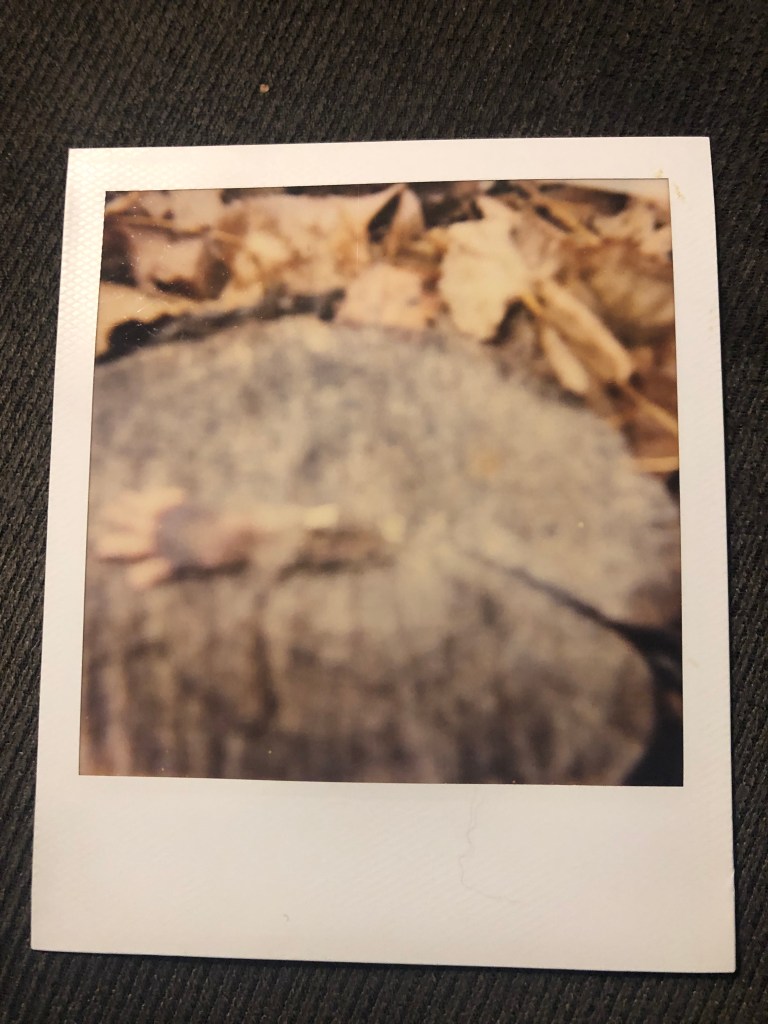
A bit disappointed that our mysterious creature had a logical explanation, we resumed our normal week; studying and hanging out with our friends in Uptown. The troll hand lived in that Dairy Queen cup/bag in the freezer for a few more weeks before we acquiesced to Christine’s nudges and tossed it out. And although I only have a fuzzy polaroid picture, the story of the troll hand lived on- a fun divergence living on through tales of “college lore”.

I was reminded of this adventure when I saw a picture of an opossum the other day- my eyes immediately drawn to the creature’s hands for identification. I fondly recalled how my roommates and I had let ourselves get lost in this (slightly disgusting) research mystery. I believe very little could have distracted us from this, as we were in what eminent researchers call flow.

Psychologist Mihály Csíkszentmihályi describes flow as “a state in which people are so involved in an activity that nothing else seems to matter; the experience is so enjoyable that people will continue to do it even at great cost, for the sheer sake of doing it” Think about the times in your life when time has flown by, and you were so connected with the task at hand that anything else could cease to exist for that moment.

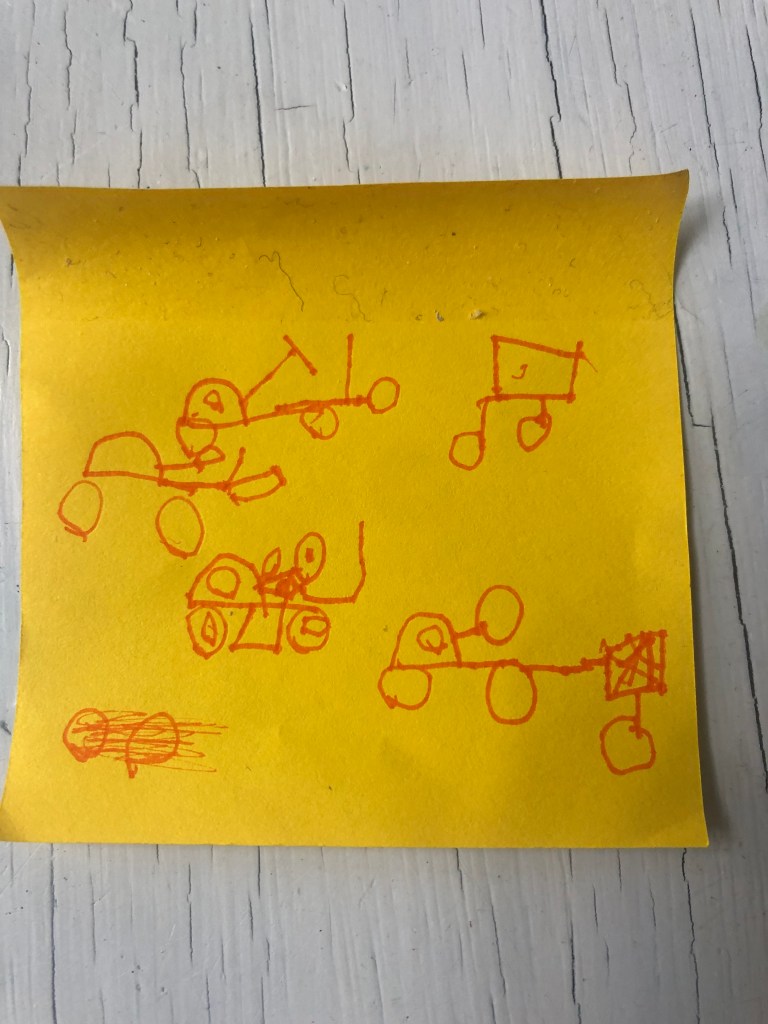
As a striving parent and teacher, I am now on the lookout for all things flow. On the ride home from school yesterday, I commented to Auggie that he is very good at solving problems by inventing something to fix it. Consequently, when we got home, his attention was consumed for 20 minutes as he sketched out designs of inventions; rivaling Roblox for most focused six year old activity in this house. It was flow.

I’ve seen it in Charly, as she repeatedly hits a volleyball above the garage- determined to perfect her serve. And it see it as I write these very words… late to pick up my kids because the flow of writing has made me lose track of time; thinking of the next sentences before I’ve finished the one I’m on.

If we can harness that flow with our own kids and students in school- just think of all they will get done. Recently I read that even the most unengaged students are experts at something. I’m not suggesting we rewrite all of our math problems to involve Pokemon characters, but letting them pull in their passions could go a long way. Let excitement for a topic lend a hand (a troll hand) in learning…

**Grit by Angela Duckworth is another book that is referenced constantly in other books and articles. Great read for parents, teachers and for adults who don’t know what they want to be when they grow up! Makes me want to be a better person/teacher/parent/researcher/student advocate.

Click book cover for Amazon link

Baby, Don’t Lose Sight

Why “data privacy” is killing our schools.

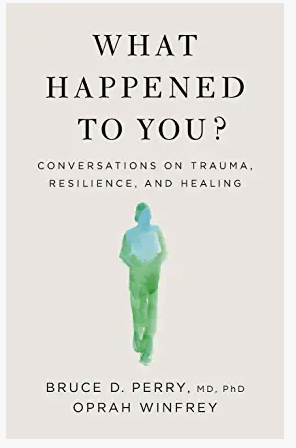
A few weeks ago, I read these word from Bruce Perry and Oprah’s book What Happened to You mentioned in my last post, “The Neurosequential Model allows us to create a version of how the individual’s brain appears to be organized; it is basically like an inspection of a house. By asking the “history” of the house’s construction- the “what happened to you?”- we are able to home in on the most likely problems.” After a hearty hallelujah to myself reading in the parking lot before school pickup, I immediately became frustrated.

For years the phrase “need to know basis” has threaded through every delicate conversation about students in schools. Meaning, there are certain things about a student that cannot be shared freely with certain people, or often anyone at all. Given the uptick in stressors the last couple years, more and more students have “certain things” that are derailing their education plan by way of unaddressed mental health concerns.

So when I read that Bruce Perry, the godfather of trauma study, says that we need to understand the full history of a child to support them, all I could think was- “data privacy” would never allow this.

Let me share an example. Let’s say you are a third grade teacher with a student named Caden. Caden is disruptive to your teaching every day. He typically tries to get the lesson off topic by blurting out things to make the class laugh and dances around to distract others. You have had a tough time getting him to open up and he doesn’t seem to want to connect with you. He frequently disrespects you and doesn’t listen when asked to do something- especially coming off the playground from recess. One day, while lining the class up after recess, you see that he is (again) not obeying. He’s still swinging while the rest of the class has started walking in. You can feel your heart pounding as you think, “This kid has absolutely no respect for authority, and I have HAD IT!” You march over, red-faced, and shout loudly at Caden for never listening, resulting in school administration having to remove him from the playground- suspending him for the day.

Phew. Some variation of this story is happening right now in some school somewhere. I know because at some point, I’ve been that frustrated teacher. What we see everyday as teachers is the only version of Caden we know; disrespectful, apathetic, unengaged, noncompliant….

But what if there was more to Caden’s story? Because of data privacy protection laws, teachers often know very little about a child’s history when they arrive in our classrooms each fall. And social workers and admin who may know a bit more are often bound by those very same laws in how much they can legally share. Through no fault of their own, they are unable to disclose events and traumas that may have shaped the student with the very person who is with them all day every day– as elementary teachers are.

What if instead in August you got some caring background on your future student? You learn that he was in and out of foster care until age 4, when mom finally gave up custody. At five they were able to track down biological dad who resumed custody but was unable to care for Caden financially and emotionally. Caden spent most of his time with various girlfriends and friends of dad’s, sleeping on couches. Caden had been in three schools in four years and had little practice in making friends, let alone learning what a caring family looks like.
…It changes the filter, doesn’t it?

This story is an example, but it’s so close to reality because it’s been my experience time and time again. Teachers and other support educators DO NOT KNOW the full picture of a child, because data privacy has scared everyone in education to the point where we are not caring for a child in the best way possible. As Bruce Perry says, teachers and caregivers must know a child’s full history in order to truly move forward.

Let’s rewind back to how knowing this background would help me teach Caden in the best way possible. Does knowing these heart-wrenching stories that no nine-year-old should have to endure change the amount I expect of him? Absolutely not. Knowing the details of those hard places these kids are coming from does not excuse the child from having to do hard things in school- but you better believe it changes the approach to those hard things. For example, if I’m teaching a lesson in math and Caden loudly announces, “this is boring…” {side bar- yes, this has happened before}. If this is a repeat behavior, it’s so easy to jump to the frustrated disciplinarian… but through my filter of his background I can instead look at the why.

Caden has been in three schools in four years with little to no academic support at home. Is it likely that this lesson is too hard, and he lacks the skills to ask for help? Is it also possible that Caden hasn’t had any practice socially, and he know kids will laugh when he interrupts? What if I know he needs practice in how to learn to trust adults (because in his experience, they leave or don’t pay him much attention.)? And what if, instead of standing over him and calling him on that disrespect (resulting in behavior escalation) I gently get down to his level and connect? Show him another example in a quiet calm voice. Assure him with my eye contact and smile that I am right with him.

Is he going to respond perfectly every time? Probably not… but it’s a step towards breaking the cycle of ‘hurt people hurt others’ and the so-called school-to-prison pipeline theory.

We need to know the whole story. There has to be a better way to protect private information about children, than to function blindly year after year. I don’t have the answer yet, but let’s work with parents, and mental health specialists to share the full picture so we can give a full education; one with caring, understanding, and yes even- high standards.

A couple weeks ago I attended an inspiring TEDTalk event with a dear friend. In between speakers they featured short videos including one of the band Lawrence singing an acoustic version of “Don’t Lose Sight”. As I continue to research and be motivated by individuals advocating to support kids, this song has run like a soundtrack in my head.
“This {stuff’s} going to kill me, but I won’t let it
And I try to give them hell, but they don’t get it
So I tell myself when I sleep at night
Don’t lose sight
Baby, don’t lose sight”

In honor of spring break on the beach in Key West, I read Rhythms of Renewal by Rebekah Lyons. Light, comforting, and so easily paired with fresh ocean air. I identified with her anxiety-filled moments and loved her suggestions on all aspects of health including food, exercise, and prayer.

Click book cover for Amazon link

/

Leprechaun Day

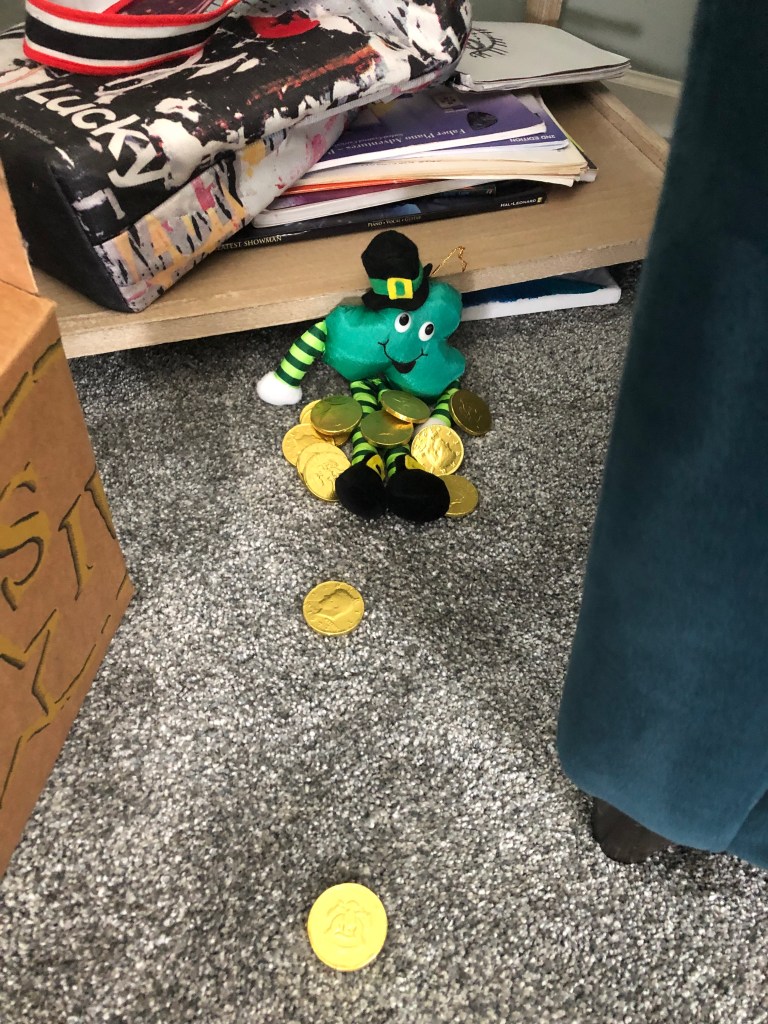
My son Auggie has asked me nearly every day for over a month, “How many days until Leprechaun Day?”. I’m not sure where the anticipatory hoopla is coming from… we’ve had a couple years involving green footprints and a box of Lucky Charms here and there, but nothing crazy.

He is at that fun age, when magic is magic, and the idea that a tiny leprechaun sneaks into our house at night to perform silly shenanigans is pure joy in his mind.

Or perhaps he just loves having something to look forward to. The next holiday to be excited about. Like when you countdown to your birthday.

As a young adult I had often struggled with focusing too much on the next thing; getting a job, getting engaged, married, having kids. I remember my dad bringing it up, worried that I was spending my days trying to predict the future, rather than enjoying the present. Since then, I’ve settled a bit- making it a daily practice to be content where I am and enjoy my surroundings.

Although… there’s part of me, in my dedicated eternal optimism, that wonders if it’s so bad to have things to look forward to? After all, isn’t it the idea of hope that allows us to keep doing our best through it all?

Some days, when the ‘Monxiety” is at it’s worst, the idea of getting moving and getting in the shower seems too much. Those days I need to pull out tiny micro-moments to look forward to and get me to the next thing; putting my towel on the heat vent so it’s warm when I get out or the anticipation of taking 10 minutes snuggled under a blanket with hot coffee -wedged on the couch between my two kids.

So on this “Leprechaun Day” I’m looking forward to days ahead of warmer weather, to continuing to work with amazing groups working toward supporting kids, and to Auggie’s face when he sees the trail of gold coins after school.

“To all the days, here and after,
may they be filled with fond memories,
happiness and laughter.” ~ Irish Toast

** I can’t get enough of the books by trauma expert Bruce Perry. So I have been glued to every word of his latest, What Happened to You, a collaboration with Oprah. Written in a conversation format, it’s full of stories and examples of how to reframe trauma and move towards a healthy, realistic future. Loved this one!

Click on book cover for Amazon link

Cinnamon Applesauce

It was 2009 and I was in the end room of the maternity wing at Fairview Southdale Hospital. I had just had my dear sweet Charly girl, and was required to stay an extra day due to an inconsequential fever. While staying there, I became slightly obsessed with cinnamon applesauce and graham crackers from the snack room, helping myself several times a day.

The other day I grabbed a pouch of applesauce from our own snack cupboard- needing something in my stomach as I shuffled kids around town. And even though it’s been thirteen years since that maternity stint, the taste of cinnamon applesauce will always bring me back to that moment. Ecstatic and terrified to bring this tiny infant home; our lives forever changed from that moment on. Surreal, and thankful and preemptively exhausted all wrapped up in a moment.

I think part of my fondness for this moment is not about the caliber of the snacks, but about the self-care of that small act of indulgence. Knowing I was about to embark on the joyride of having a newborn that my friends had warned me about; the cliche sleepless nights, messes and spit up, and draining dependency. So taking my snack break; doing something for myself, felt like pre-regulating for the journey.

The concept of regulation has crept its way into everything I read and learn about working with today’s children. And while being ‘regulated’ entails many things, for most people it simply means being content. Basic needs met, emotions stable, ready to receive the world. And everyone achieves this state in a different way. For some it’s exercise or fresh air, meditation, or social check-ins from treasured friends and family.

As adults we have learned through enough trial and error what we need to make our way towards content. But I am more and more convinced of the desperate need to teach this to our kids. So many times, kids are unaware that they are dysregulated…. they just get angry, or frustrated or withdrawn. Here’s an example.

My little guy gets in the car every day at pickup from Kindergarten in some state of dysregulation. Today it looked like this; Before he steps in the car, he whips off his wet mittens and throws them in. Usually he yells loudly about the wrong snack choice or his sister bothering him. If it’s really bad, he may refuse to get in the car or cry loudly for “no reason”. At the beginning of the school year this drove me insane, my internal disciplinarian thought, ‘He is not showing any respect. He needs to be kind when he comes in the car, this is gonna be a consequence.’ And while I’m still a big fan of being firm and not tolerating that behavior, I also realize what’s really happening.

According to his Kindergarten teacher, he’s very well behaved throughout the day. How this miracle happened, I’m still not sure. But for an active boy to listen, work, walk respectfully, this tells me he is holding it all in the best he can until he hits the car. Next, the child does not eat good lunches. Whether it’s because he’s enjoying the social aspects of lunch or he’s just that picky, by the time 4:00 rolls around he’s HUNGRY. And although we send a water bottle, I know he is not drinking enough water to get him through the day. So… hungry, thirsty, tired (mentally, emotionally, and often physically) and rather than admit he’s all of those things, it comes out sideways and upside down and angry.

I’ve really had to work hard to remind myself- this is not personal. In fact, often, he doesn’t even remember he acted this way. Instead, I hand him a snack and remind him about his water bottle. I often play soft music and take long deep breaths- even if he’s complaining loudly. It’s taken us most of the year, but we’re finally at the point where he can voice what he needs when he gets home (a quiet activity, fresh air and movement, playdough etc…)

After ignoring a verbal barrage in the car and refusing snack he walked in the door and picked out a kinetic sand set. He snapped at me as he removed all the rocks from the bin- apparently in the wrong place. But as he played you could see the calm seep in. Slowly he pushed sand from one side to the other, squishing it with his hands and the toy bulldozer as I silently nudged an applesauce pouch and water bottle toward him. After a few minutes of quiet play, he stopped and looked at me and said in a kind voice, “Mama, want to snuggle with me on the couch now?” Perhaps it was the snack or water. Maybe it was the quiet kitchen or soft lighting. And it probably helped that he got to squeeze and push sand around- sensory play being heavily praised right now in research for it’s regulating benefits. Either way, the anger had cleared and he was ready to interact. “I love you, Mama…” he said as he walked to the couch. “Love you too, buddy.” I said, sipping my cinnamon applesauce pouch.

Side note- more to come on how to help our kids and students regulate… I’m still learning.

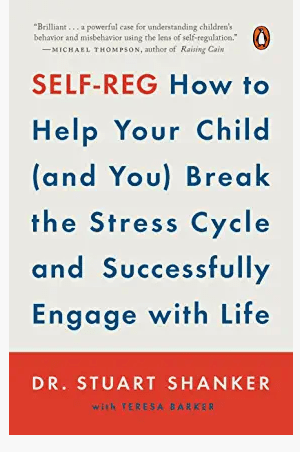
** If you want to know more about regulation- for kids and yourself- you have to read this book: SELF-REG How to Help Your Child (and You) Break the Stress Cycle and Successfully Engage with Life. Lot’s of brain research, if you are interested in that, but probably the best book I’ve read for reframing so many typical “bad” behaviors.

Click book cover for Amazon link

Geriatric Skiing

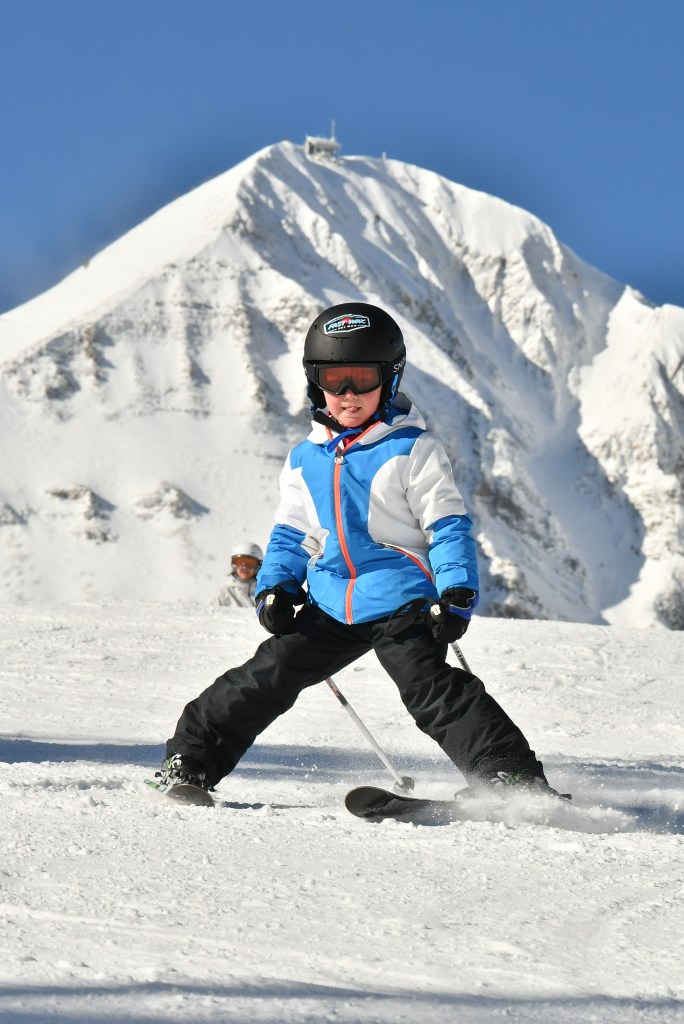
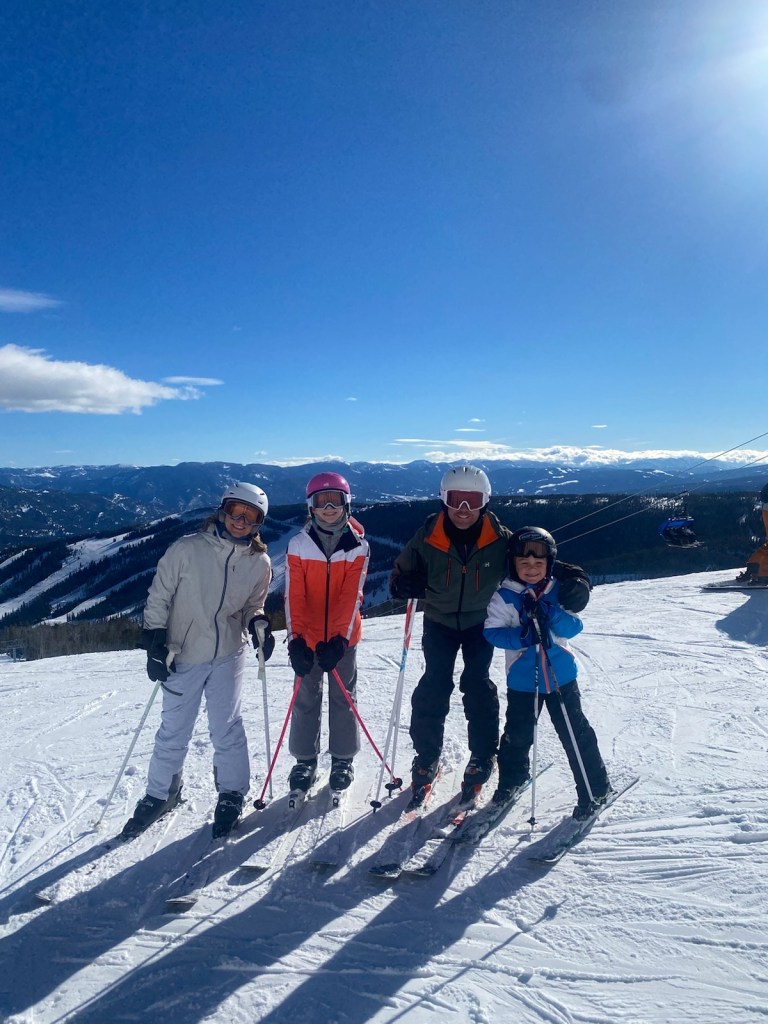
Auggie and I stood huddled in anticipation around a computer monitor at the photo shop in Big Sky, Montana. Resort photographers had rotated taking pictures on different ski runs for tourists to later view and purchase. I grinned proudly at the shots of my little kindergarten skier. His bright blue jacket contrasting against the white snow and picturesque Rocky Mountains behind as he plowed bravely down the hill.

Next came shots of my husband, showing off his easy lifelong skier stance, and salt-and-pepper vacation beard in full mountain appropriateness.

And then there’s me. Frumpy coat pockets bulging with kids snacks and extra layers, I am pain-grimacing in every shot the photographer caught. Needless to say I didn’t purchase any of the last few shots.

There’s nothing like being a bit out of shape and a good few pounds up to make you feel your age. And although we had a wonderful trip this past weekend and feel so fortunate to have been able to take it, I’ve never felt more old. And I know, I know… I’m certainly not elderly… but it hit me that my confident risk-taking skiing years are probably well behind me.

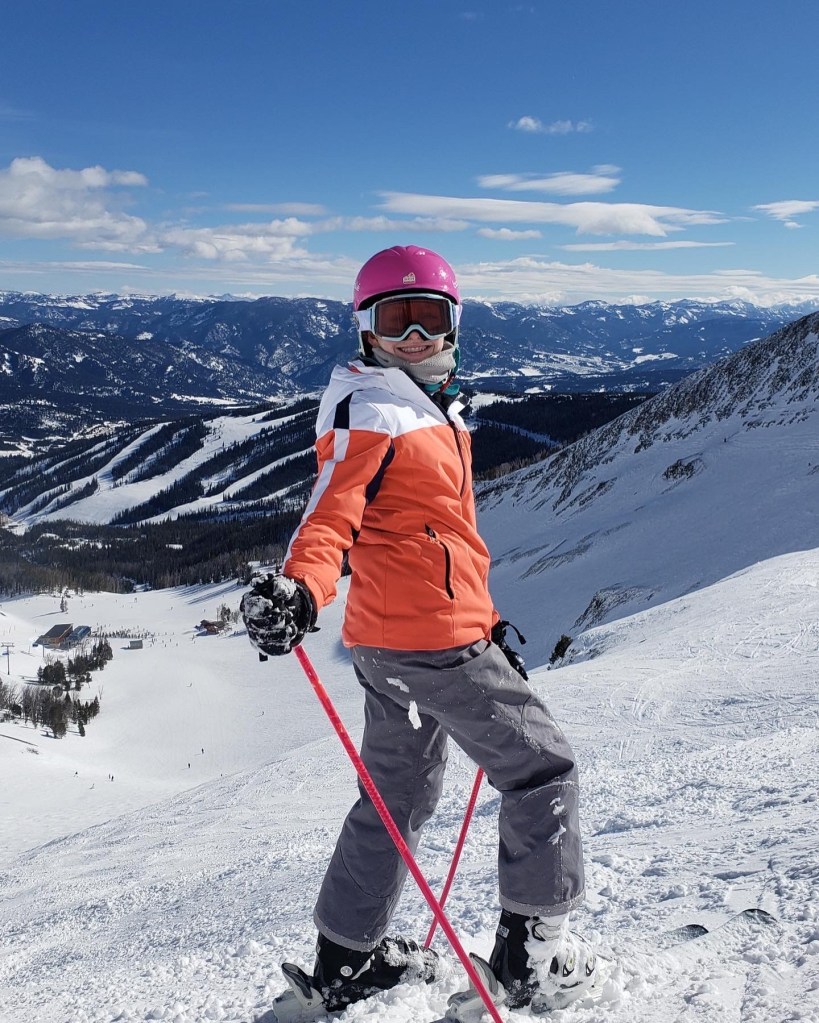
It’s true the last few years spent on “Minnesota” ski mountains have altered my perception, but an “easy” green hill in Big Sky left me panicked for most of the ride down. A few times on the first day I hit a couple patches of ice early on the top of a run. It was enough to slow my pace, forcing every muscle in my thighs and hips to tense as I tried to remain in control. The result made my legs feel like rubber the second and third day. I watched in envy as my children (yes, even the six-year-old) easily out-skied me and listened half in anxiety and half joy as my thirteen-year-old recounted her dare-devil shenanigans from the day.

One of the last afternoons I sat by the fire in the hotel common area. Nursing my sore everything with an aprés ski glass of cabernet, I eavesdropped on an older man talking on his phone from a bench in front of the fire. I listened in awe as he described his day of skiing- he had to be well over 70. I smiled as he rambled on to describe a brisket he cooked and then a long story about a truck. Empty wine glass in one hand and book in the other, I pushed my aching body up from the cozy armchair. As I turned I realized the man wasn’t on the phone at all… just sitting by himself near the hearth, chatting on about the day.

Not one person in that hotel common room batted an eye at the older man’s self conversation, but I’m quite hopeful that had it been me, there would be concern.

I chuckled and limped my forty-something self back to my room.

My play-based post last week led my interests directly into this one! Project Based Learning is packed with information on how to start PBL in a classroom. I particularly like the last section on how to “flip” your current instruction so it’s inquiry based. (For example- instead of saying, “Today we are going to learn about adjectives” to start a lesson, a teacher might say, “Take a look at this sentence. Grab some colors- let’s color code the different parts. What do you notice about these words?”) A very specific and current read (2021).

Click book cover for Amazon link

Past the Point of No Return

Alright. This is starting to get dangerous here. The more I read about play, the more frustrated I am with the current school system expectations. Are there some schools that are doing things with inquiry and play-based learning? YES! And when I have inquired about the process to achieve this, the average situation is years of ‘bucking the system’ swirled in with debating controlling admin, constant parent reassurance and rewriting the curriculum. Why is it so hard to add play into school systems? I think it’s all about fear.

It started with fear of “The Great United States of America” falling behind the high-achieving countries.

It’s fear of deviating from “this is what we’ve always done” (consequently one of the most harmful phrases in education today).

Fear of not producing results on an outdated and toxic standardized testing system.

Fear of having to reinvent the wheel. Taking the easy (non-engaging) route.

Fear of having to admit that kids have changed in the last 20 years.

Fear of being judged by coworkers, admin, and misinformed parents that the class is just “wasting time”.

Here’s where the danger comes in. Have you ever thought; I’d love to read that/watch that/look into that/take that class but I just don’t have the time? I have been lucky enough to do all those this year! And I found that reading this book led me to another, and an article, and another researcher. Guess what it always leads back to? Play. Maybe it’s called inquiry, or project-based, or something else… but I feel it’s time to take the negative stigma from that word and start helping our kids learn in the way they are genetically hard-wired to receive information.

In past posts I’ve expressed my irritation that if you search ‘play-based’ or ‘nature-based’ learning, 90% of the information you get is geared towards early childhood. First of all, yes please! Let’s start those preschoolers with the play-based social skills needed to be successful learners as they grow up. It’s been proven many times that pushing “certain curriculum” on our young learners before that are developmentally ready is hugely detrimental to their academic and social futures. But WHY is 90% of the info geared towards early childhood? …Because if anyone should be allowed to play at school, preschool is the age society can stomach.

Play looks different at every age level. It might take the shape of asking questions, being curious, letting students lead, using class interests to guide topics. Project-based learning, problem-based learning, inquiry studies…all different varieties of play at the root.

There’s a massive disconnect between the needs of today’s employers and the students coming out of our school system. Many students today memorize, drill, and lose. According to Job Outlook 2020, here are the top three skills today’s companies are looking for:
1. Problem-solving skills
2. Ability to work in a team
3. Strong work ethic
They also mention leadership, initiative, and communication skills.

Researchers have proven and emphasized time and again that play strengthens all the skills above. I have yet to find a study that claims to be looking for employees who have memorized the most facts in their years of schooling.

And I know teachers are overwhelmed. The idea of taking on one more change seems to be a hard line. But what is the alternative? Holding onto the carpet with an outdated mode of teaching and learning while behaviors escalate?

Is this hard to change? The hardest. But it’s time. It was time yesterday.

Purposeful Play was recommended to me by a Kindergarten teacher teaching in a play-based model. Although more directed towards K-3, I found the inquiry chapter at the back to be one of the most inspiring chapters for teachers seeking a more engaging and meaningful mode of learning. Highly recommend!!

Click book cover for Amazon link

Helicopters, Snowplows, and Blow-Up Hands

We’ve all heard the term ‘helicopter parents’ (those who hover and swoop and over-protect their kids) and even the newer ‘snowplow parents’ (next level helicopters that plow the easy route for their kids to travel) but today I realized there’s another layer to this when dealing with intense kids.

We love our sweet little guy so much. He is athletic, smart, the best snuggler in the house and… intense. At everything. When he’s charming and funny- it’s intense. When he’s frustrated and angry…yep, intense. Couple that intensity with moments when he is dysregulated (hungry, tired etc…) and it adds up to a loud, anger-amplified tantrum reaction to even the smallest problem.

I’m not proud of the moment I’m about to share, but it made me realize the slippery slope towards helicopter parenting when subjected to years of intense over-reactions.

The whole school had gone to Skateville (local roller skating rink) and my little kindergartener had had a wonderful time. I met his class at the rink, and was impressed at how independent he was; buckling his own rollerblades, zooming around the rink, getting change for the video games. So I wasn’t prepared for the child I received at pick up two hours later. He spent the ride home launching into a regretful tirade on how he wished he would have bought a giant inflatable hand like some other kids on the bus ride home. In my defense, the inflatable hand wasn’t even on the radar during the entire two hour field trip.

But here’s where my parenting brain goes off the rails… Minute 14 of this loud, angry, tearful rant about not having a blow up hand I had two thoughts pop in my head:
#1- Maybe we could gather the family and make a special trip to Skateville tomorrow night.
#2- Perhaps Amazon has a similar hammer we could order at home.

I know, I know. It was knee-jerk reaction. A desperate gut response to years of this sort of intense, angry tantrumming. And I admit, my reaction was a lazy equivalent to, dear Lord, just make it stop.

Thank goodness I had the next moment to pause before I said anything. Perhaps all of those parenting and teaching books I’ve been reading have finally sank in and my next thought was, “then what does he learn?” Swooping in and rescuing him doesn’t teach him the things we want him to learn as a child:
* How to wait for things we want
* How little problems seem worse when you are tired and hungry
* There will always be something better that someone else has

It was in that moment I realized how hard it is to make the right choices as a parent when your child is louder and more intense. I’m also convinced that those “experts” that call out helicopter parents so easily probably have perfect, mellow kids. I’m sure it’s a lot easier to show tough love when you get a mild response of a pouted lip or an ‘oh well’.

For the record, I don’t think I would have gone through with recuse plan #1 or #2… but it was certainly a wake-up call that it even entered my thoughts.

To all those parents out there trying to stay calm in the intensity… I see you. Fight that helicopter response even when it means a louder, longer ride home. Remember the essential life skills you are teaching them. I think the ultimate question here is… does anyone ever REALLY need a giant blow-up hand??

I‘m not sure I would have picked up this book based on the cover and title alone… but it was a FANTASTIC read for brain-based teaching approaches! I heard Zaretta Hammond speak in a TED talk and immediately ordered this book. I can tell you now, this will be a re-read… so many strategies for the best way to have kids learn in the classroom.

Click book cover for link

Nudge

We try so hard to hyper-control every aspect of our lives. Those who have struggled with infertility know it is feudal to try and manage the timing of the miracle of life. And while it certainly makes sense to make responsible choices, I’ve been reminded of the power of being at the mercy of just… listening.

This past week I’ve had some amazing conversations with valued friends and coworkers. Being in learning mode this year, I’ve been pushing hard to soak in all the sparks of interest involved with trauma and play. But it feels like time to listen to the universe. (If my almost-teenage daughter read that last line, she would most certainly declare me ‘cringey’.)

Lately when certain people pop into my thoughts- I’ve tried to follow that nudge and send them a message or plan a call. And I’ve been so glad I did; I’ve felt more connected just listening for what I need to learn from that conversation.

I’m not sure I 100% believe in signs, but I certainly feel a rooted reassurance when I am present and listening. Distraction and control come in many forms- a job, consuming kids’ activities, bingeing on shows (guilty)…but paying attention to where we’re being led to involves honesty, vulnerability, and seeing the good in things around us.

We’ve all heard popular urban legend stories of those “gut feelings” that came at the right time and place, but my recent favorite is from the book I highlighted below. Author Matthew Kelly talks about heading home from work and a friend came to mind. He hadn’t heard from him in awhile and knew he was having a tough time so he swung by his house on a whim. The friend and his place were a mess, so he made him take a shower while he ordered a pizza. They sat and talked and later the friend confessed he was planning to take his own life that night. That simple visit and pizza reminded him that someone did care. Matthew Kelly says, ” Something like that stops you in your tracks. It reminds you how powerful our actions are and how tragic inaction can be.”
Pay attention to those nudges…you just never know.

I, along with many fellow Catholic church attendees, got this book for free on Christmas Eve. Several archdioceses around the country have handed out books the last few years. I’ve enjoyed Matthew Kelly and his message of becoming the best-version-of-yourself, so I tried it out. This feels as if you are looking into his private journal. Different than any of his other books, it’s like he just wrote down all his revelations as the came up… and it kind of worked. I found it brutally honest about struggles in life and glad I listened to the “nudge” to read it this week. One of my favorite quotes from it tied in perfectly with the connections I’ve had recently, “Choosing to spend time with people who build you up, accept you, and love you is a sign of emotional health and intelligence.”

Click on book cover for Amazon link…or find a friend that got a copy at Christmas!

Does All Work and No Play Really Make Jack a Dull Boy?

A group of moms and 12 year old girls sat around a large table playing cards at my neighbor’s house over winter break. It was getting late; an epic card battle that had played out over the last few hours. Suddenly, my daughter’s friend jumped up abruptly from the table and started bouncing and swaying side to side. “I just can’t sit anymore, I need to move!”, she giggled. I smiled, relating. I’ve often joked that teachers go into education because they can’t sit still.

But the researcher in me was curious. “Is it hard to sit still at school?”, I pressed.
“It’s the worst!”, she complained, “After a while it just… hurts to keep sitting.”
School.
Is physically painful.
And let me be clear- I am not faulting the school she attends (I’ve actually heard many positive things)…I’m faulting the “expectations” of what school is in general.

When I asked what would help, all three twelve-year-olds at the table agreed they needed more breaks and movement during the day. And these are kids who are incredibly active outside of school; spending 10-15 hours a week each in competitive gymnastics, dance, and volleyball. So I started looking more into movement and play during the school day…

This year I’ve been volunteering to read with 1st graders. The other day I was reading with a sweet seven-year-old who was particularly unfocused. As we practiced her word list, she swung her feet under her chair and let her eyes chase every wandering kid in the hallway. After struggling through the first half of the list, I stopped and asked her if she needed a break. “Yes”, she sighed, “I don’t want to work right now. I just want to crawl on the floor and play.” (Again, no fault of the school- she’s at a great school with a wonderful, caring teacher.) But it continues to make me question; How much movement do kids need in school?

Here’s where the controversy begins. I’ll fully admit; I see a bit of both sides.

Perspective A: Kids are not getting enough movement at school.
Like my sweet neighbor, kids are being asked to sit for long periods of time. Some teachers are geniuses at breaking up and engaging lessons, but others out there are still living on seated lecture and worksheet overkill. Kids are expected to be still, quiet, obedient, and calm. In some ways the classroom hasn’t changed much in over 100 years! (Yet 100 years ago the kids were helping with the farm before and after school and walking several miles there and back to counteract all that still obedience.) And don’t get me started on schools around the country that continue to cut time for recess, even withholding it for academic and behavior consequences!

Perspective B: Kids need to learn to work hard and focus.
But yet, I do see that we need to teach kids how to persist. If we excuse them from struggle, and soften the edges on every assignment, how will they get through college or the work force? Focus and hard work have a place. Sometimes, as a classroom teacher, I’m tempted to flit from project to project, letting kids have 100% fun and do what they decide. But I think maybe the next grade level teachers would kill me- having to retrain them the next year. Like it or not, learning stamina is part of surviving high school, college or trade school, and for sure holding down a future job.

And maybe it’s not black or white. Perhaps, there is a hybrid of perspectives that allow us to keep school from being physically painful, while still teaching a work ethic for survival in a modern world. In my research this year, I’ve heard of the following extraordinary things happening in classrooms of local experts:


– Schools that have “loose parts” play centers, scheduling time for tinkering and problem-solving.

Year One (Kindergarten age) Teacher Kylie Roberts, Victor Harbor, South Australia

– Secondary schools with a healthy dose of “project-based learning” in their curriculum. Students are choosing topics of study, making a plan for their learning, and solving problems as they go. The result being students who are more engaged and interested in their learning!


– Schools adopting the “Finland” model of instruction; 45 minute lesson followed by 15 minute breaks. Ideally breaks outside… but maybe just in the form of open-ended loose parts-type play breaks.


– Schools that are encouraging walks/fresh air breaks for middle school students.


– Teachers that are emphasizing mindfulness and awareness in their classrooms. Teaching students to pay attention to what their bodies need to learn better (movement, walk, sensory tools, conversation…). * I’ve observed some wonderful educators be very structured with this! Knowing your “zone” or what you need does NOT mean students can do whatever they want whenever they want… But when students can identify that they are struggling and know how to fix it- I think that would eliminate 80% of our “behavior issues” in schools!

– Teachers that hold high expectations of rigor. They assign hard things, then come alongside them and make sure they are engaged and asking for what they need to accomplish it. Their students come out of a unit feeling proud and confident and independent. They are learning that school can be fun and challenging at the same time.

Where do people stand on this? Do you feel like kids get enough movement in schools? Are we not teaching enough hard work ethic? Or should a hybrid of the two be the goal! Please message me, comment on WordPress or Facebook, or email me at mrswangen4@gmail.com
(And if anyone wants to join me on my recent crusade to gather play-based classroom ideas for ALL levels please especially let me know!!!)

** You know the book that keeps getting referenced in other books? I had heard about The Path to Purpose three times before finally ordering it. Easy to read and a super interesting topic. I recommend it for any educator, and parents who have kids close to graduating high school, just out of high school… or will someday need a job.,

Click book cover for Amazon link