Alright. This is starting to get dangerous here. The more I read about play, the more frustrated I am with the current school system expectations. Are there some schools that are doing things with inquiry and play-based learning? YES! And when I have inquired about the process to achieve this, the average situation is years of ‘bucking the system’ swirled in with debating controlling admin, constant parent reassurance and rewriting the curriculum. Why is it so hard to add play into school systems? I think it’s all about fear.

It started with fear of “The Great United States of America” falling behind the high-achieving countries.
It’s fear of deviating from “this is what we’ve always done” (consequently one of the most harmful phrases in education today).
Fear of not producing results on an outdated and toxic standardized testing system.
Fear of having to reinvent the wheel. Taking the easy (non-engaging) route.
Fear of having to admit that kids have changed in the last 20 years.
Fear of being judged by coworkers, admin, and misinformed parents that the class is just “wasting time”.
Here’s where the danger comes in. Have you ever thought; I’d love to read that/watch that/look into that/take that class but I just don’t have the time? I have been lucky enough to do all those this year! And I found that reading this book led me to another, and an article, and another researcher. Guess what it always leads back to? Play. Maybe it’s called inquiry, or project-based, or something else… but I feel it’s time to take the negative stigma from that word and start helping our kids learn in the way they are genetically hard-wired to receive information.
In past posts I’ve expressed my irritation that if you search ‘play-based’ or ‘nature-based’ learning, 90% of the information you get is geared towards early childhood. First of all, yes please! Let’s start those preschoolers with the play-based social skills needed to be successful learners as they grow up. It’s been proven many times that pushing “certain curriculum” on our young learners before that are developmentally ready is hugely detrimental to their academic and social futures. But WHY is 90% of the info geared towards early childhood? …Because if anyone should be allowed to play at school, preschool is the age society can stomach.

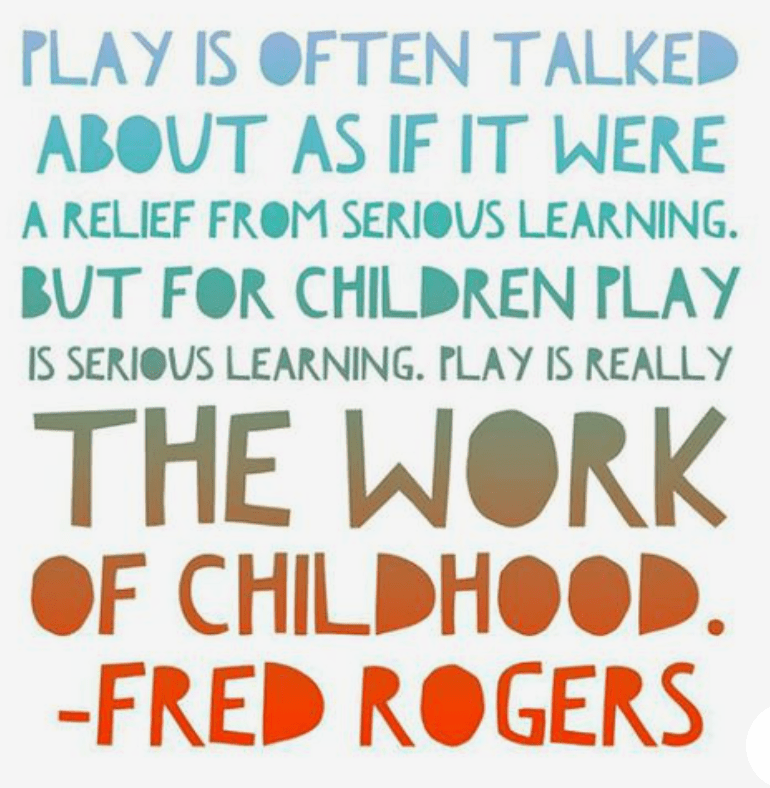
Play looks different at every age level. It might take the shape of asking questions, being curious, letting students lead, using class interests to guide topics. Project-based learning, problem-based learning, inquiry studies…all different varieties of play at the root.
There’s a massive disconnect between the needs of today’s employers and the students coming out of our school system. Many students today memorize, drill, and lose. According to Job Outlook 2020, here are the top three skills today’s companies are looking for:
1. Problem-solving skills
2. Ability to work in a team
3. Strong work ethic
They also mention leadership, initiative, and communication skills.
Researchers have proven and emphasized time and again that play strengthens all the skills above. I have yet to find a study that claims to be looking for employees who have memorized the most facts in their years of schooling.
And I know teachers are overwhelmed. The idea of taking on one more change seems to be a hard line. But what is the alternative? Holding onto the carpet with an outdated mode of teaching and learning while behaviors escalate?
Is this hard to change? The hardest. But it’s time. It was time yesterday.
Purposeful Play was recommended to me by a Kindergarten teacher teaching in a play-based model. Although more directed towards K-3, I found the inquiry chapter at the back to be one of the most inspiring chapters for teachers seeking a more engaging and meaningful mode of learning. Highly recommend!!

 Teaching the Good Stuff